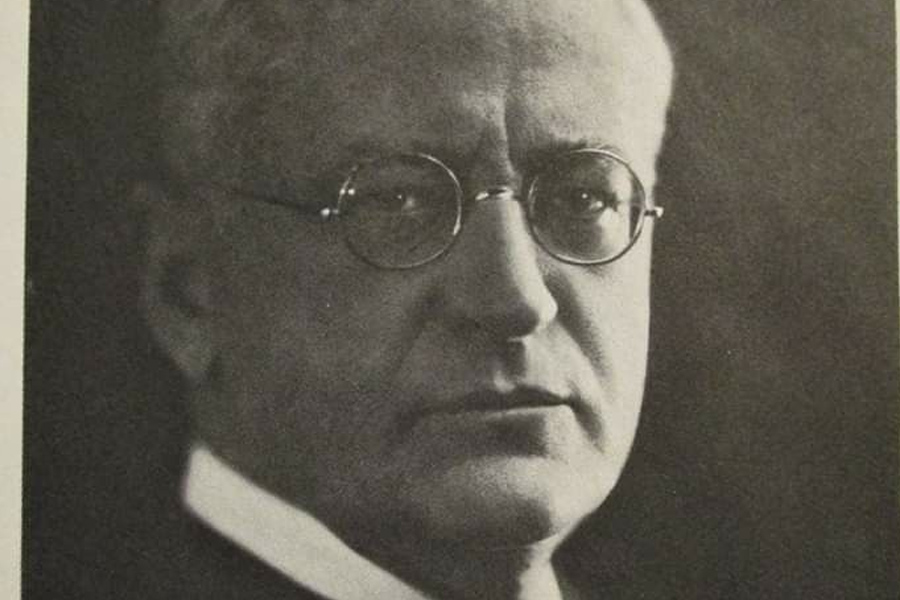
A Lawyer, Judge, and Political Architect
I see Anthony Dickinson Sayre as one of those figures who seems to stand in two rooms at once. In one room, he is a polished Alabama lawyer, judge, legislator, and Supreme Court justice. In the other, he is a builder of systems that hardened inequality into law. Born on April 29, 1858, in Tuskegee, Alabama, and dying on November 17, 1931, in Montgomery, he moved through the legal world with the confidence of a man who knew the machinery of power from the inside.
His education and early training gave him the tools he would use for decades. He earned a master’s degree in 1878, studied law, and was admitted to the bar in 1880. That may sound like a standard legal beginning, but his career soon spread far beyond a courtroom desk. He served as clerk of the Montgomery city court, then entered elected office, then the bench, and finally the Alabama Supreme Court. His life reads like a staircase built of law books and politics.
What makes Anthony Dickinson Sayre especially significant is that his name is tied to the 1893 Sayre Act, a voting law designed to make participation harder and to reshape the electorate. In my reading of his life, that is the sharp edge of his legacy. He was not only a legal officer but also part of the machinery that helped shape Alabama’s racial order. His career was long, accomplished, and deeply consequential.
The Family Network Around Him
Anthony Dickinson Sayre did not move through life alone. He stood at the center of a large and influential family, and the names around him matter as much as his own. His parents were Daniel Sayre and Musidora Morgan Sayre. His mother belonged to the Morgan family, a connection that linked the household to a wider political world. That family background helped place Anthony in a social current that ran through Alabama’s legal and political elite.
He married Minerva Buckner “Minnie” Machen Sayre, a woman remembered for her social presence and artistic temperament. Their marriage became the anchor of a large household. I think of the Sayre home as a kind of crowded lantern, with each child and relative casting a different color against the glass.
Their children included Marjorie Sayre Brinson, Rosalind Sayre Smith, Clothilde Sayre Palmer, Anthony Dickinson Sayre Jr., Lenora Sayre, and Zelda Sayre Fitzgerald. Some family records also mention a son, Daniel Morgan Sayre, who died young. The family structure is sometimes presented differently across genealogical accounts, but the broad shape is clear: this was a big, complicated Southern family with tragedy woven into its lines.
Zelda Sayre Fitzgerald is the daughter most people recognize. She became a novelist, painter, and cultural icon through her marriage to F. Scott Fitzgerald, but she was also the youngest child of Anthony Dickinson Sayre and Minnie Machen Sayre. Through Zelda, Anthony’s family entered American literary history. Through Scottie, Zelda’s only child, the family line continued into another generation of memory and writing.
Children, Grandchild, and Great-Grandchildren
The Sayre family tree branches in many directions, but the line through Zelda is the one that most often draws attention. Zelda and F. Scott Fitzgerald had one daughter, Frances Scott Fitzgerald, known as Scottie. That makes Scottie the granddaughter of Anthony Dickinson Sayre.
Scottie then became the mother of several children, including Tim Lanahan and Eleanor Lanahan. Eleanor Lanahan later wrote about the family and preserved much of its memory, which means Anthony’s great-grandchildren were not just descendants but also keepers of the family story. Other great-grandchildren associated with Scottie include Samuel Jackson Lanahan Jr. and Cecilia Scott Lanahan.
This layered family history matters because Anthony Dickinson Sayre was not simply an isolated legal figure. He became part of a chain that moved from law and politics into literature, memory, and public identity. His name survives not only in judicial history but also in the living map of a family that produced one of the most famous women of the American South.
Career in Law and Public Office
Anthony Dickinson Sayre served the public for decades. He was city court clerk from 1883 to 1889, Alabama House of Representatives member from 1890 to 1893, Alabama Senate member in 1894, and Senate president in 1896. In 1909, he became Associate Justice of the Alabama Supreme Court after serving on the Montgomery municipal court bench since 1897.
That approach depicts a man who easily switched between legislative and judicial power. He builds legal scaffolding. After designing the structure, he sat inside and interpreted it. His involvement with the Montgomery municipal board of education shows a civic sphere outside law.
Twenty-two years on the Alabama Supreme Court was his highest office. That tenure provided him power, continuity, and intellectual authority. He received an honorary Doctor of Laws in 1928 to recognize his legal position in the state.
The Sayre Act remains his most notable political achievement. It contributed to Alabama’s Jim Crow architecture and hampered voting. Legal careers can be polished like marble, but they can still be founded on exclusion. Anthony Dickinson Sayre’s public existence revolves around that contradiction.
Finances, Household Life, and Social Standing
Despite his high social status, Anthony Dickinson Sayre’s finances are in order. His Supreme Court justice income supported a distinguished family, yet they lived modestly. The family had staff and a well-kept household, renting houses as necessary.
The Sayres’ home was upper class and lived in Montgomery’s attractive neighborhoods. Through taste, presentation, and family management, Minnie Sayre shaped that universe. The family lived like a polished window in a brick wall. The inside was refined. Alabama politics and racial hierarchy were harsher outside.
This status-restraint balance formed the kids. They lived in a privileged, disciplined, and public household. That milieu was important for Zelda, who would later be known for her flair, visibility, and conflict.
Personal Character and Historical Memory
I find Anthony Dickinson Sayre difficult to flatten into a single description. He was intelligent, accomplished, and deeply embedded in Alabama’s elite institutions. He was also a man tied to voting restrictions and the legal order that limited democracy for Black citizens. Those two truths do not cancel each other out. They sit side by side.
His memory today is often filtered through Zelda Fitzgerald, which gives his name an unusual afterlife. Many people encounter Anthony Dickinson Sayre not through Alabama law books but through the family line that leads to Zelda, Scottie, and Eleanor Lanahan. That literary connection has widened the public memory of his name, even while the legal and political consequences of his work remain central to understanding him.
FAQ
Who was Anthony Dickinson Sayre?
Anthony Dickinson Sayre was an Alabama lawyer, judge, legislator, and Supreme Court justice born in 1858 and died in 1931. He is also remembered for his role in Alabama voting restrictions and for being the father of Zelda Sayre Fitzgerald.
Who were Anthony Dickinson Sayre’s closest family members?
His parents were Daniel Sayre and Musidora Morgan Sayre. His wife was Minerva Buckner “Minnie” Machen Sayre. Their children included Marjorie, Rosalind, Clothilde, Anthony Dickinson Sayre Jr., Lenora, Zelda, and likely Daniel Morgan Sayre, who died young.
How is Anthony Dickinson Sayre connected to Zelda Fitzgerald?
Anthony Dickinson Sayre was Zelda Fitzgerald’s father. Zelda later became the wife of F. Scott Fitzgerald and the mother of Frances Scott Fitzgerald, known as Scottie.
Who are Anthony Dickinson Sayre’s descendants?
Through Zelda and Scottie, his descendants include Eleanor Lanahan, Tim Lanahan, Samuel Jackson Lanahan Jr., and Cecilia Scott Lanahan, among others in the family line.
Why is Anthony Dickinson Sayre historically important?
He mattered as a long-serving Alabama jurist and legislator, but also because of his role in shaping voter suppression laws. His life sits at the intersection of legal accomplishment, political power, and racial exclusion.