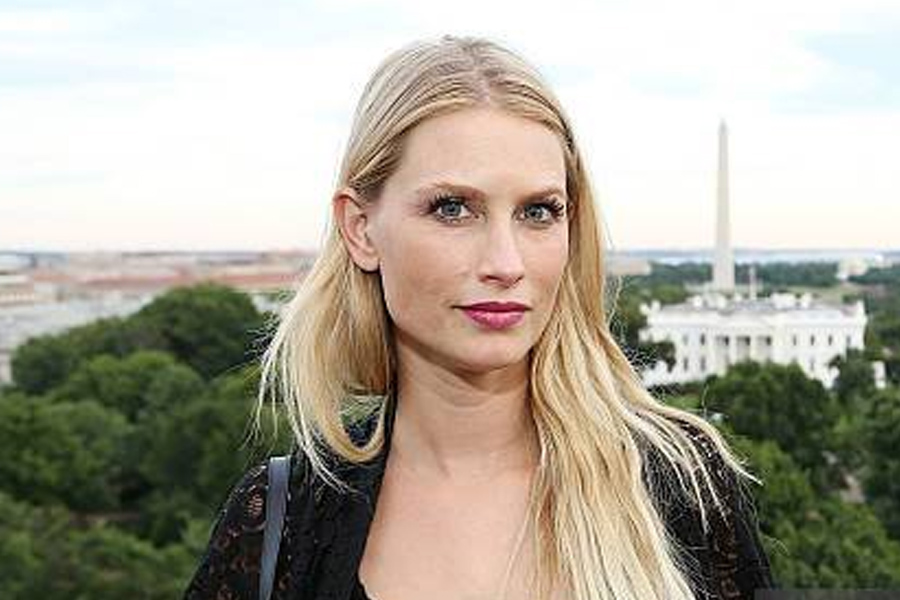
A name that travels across worlds
I find Khaliya Aga Khan to be one of those figures whose life seems to sit at the meeting point of many streams. She is a public health specialist, a humanitarian, an investor, and a speaker whose work moves between medicine, technology, social impact, and leadership. She is also known as the former spouse of Prince Hussain Aga Khan, which places her within one of the most recognized family networks connected to global philanthropy and public service.
What makes her story striking is not only her connection to royalty, but the way she appears to have built a professional identity with its own shape and momentum. In public descriptions, she has been linked to public health, mental health advocacy, social entrepreneurship, and design thinking. That combination gives her profile a layered quality, like a woven cloth with several strong threads crossing at once.
Her public life also shows movement across countries and institutions. She studied at New York University and at Columbia University’s Mailman School of Public Health, worked in international health, served in the Peace Corps in Bulgaria from 1999 to 2001, and later became involved with development, innovation, and investment. The dates matter because they show a career that did not appear overnight. It was built step by step, country by country, through service, study, and public-facing work.
Family connections and personal relationships
When I look at Khaliya Aga Khan’s family story, the most important relationship in public view is her marriage to Prince Hussain Aga Khan. They reportedly met while studying at Columbia, converted that connection into a marriage in 2006, and later divorced in 2011. The marriage is widely described as childless. Even so, it remains the central bridge between her personal life and the Aga Khan family circle.
Prince Hussain Aga Khan is the son of Aga Khan IV and Salimah Aga Khan. He is also the brother of Rahim Aga Khan V, and part of a wider family that includes Princess Zahra Aga Khan and Aly Muhammad Aga Khan. Through marriage, Khaliya became connected to that high-profile family structure, even though the marriage later ended. In public language, that makes her a former spouse rather than a current spouse, and that distinction matters.
Her own birth family is also visible in public references. Her father is identified as Professor Norman White, described as an IT specialist, and her mother is Dr Margaret White, described as a psychologist. Those names matter because they help anchor her outside the royal context. She did not simply arrive from nowhere into a titled life. She came from an educated family background, and that background likely helped shape the range and confidence of her later work.
I see her family identity as having two layers. One layer is her birth family, which gave her roots in scholarship and professional life. The other layer is her former marriage into the Aga Khan family, which placed her in a global public narrative tied to philanthropy, faith, and prestige. The two layers do not cancel each other out. Instead, they create a fuller picture of a woman whose life has moved between private training and public visibility.
Education, service, and the shape of a career
Khaliya Aga Khan’s professional path reads like a map with several carefully chosen roads. She studied at New York University, where she earned a degree in European Studies and International Affairs, and later at Columbia University’s Mailman School of Public Health, where she graduated with honors. That combination suggests both international orientation and strong interest in human wellbeing.
She also served in the Peace Corps in Bulgaria from 1999 to 2001. I view that period as important because it signals direct, ground-level service before the larger public profile emerged. Peace Corps work often builds practical skill in listening, adaptation, and working across cultures. Those qualities seem to echo through her later career.
Public profiles describe her as someone who worked on infectious disease, health policy, and access to medicines. One account says she helped negotiate lower-cost opportunistic infection drugs for an AIDS hospital in India. Another says she worked on health and national security at the Council on Foreign Relations. These details show a career that moved beyond theory and into systems, where policy and human lives intersect.
She also appears to have stepped into the world of entrepreneurship and venture capital. Public descriptions identify her as a founder or co-founder of Falkora, Tell Your Story, and the Khaliya Foundation, and as someone involved in Guardian Circle partnerships. That mix of ventures suggests a person interested in building platforms rather than simply commenting from the sidelines. It is the difference between lighting a candle and building a lighthouse.
Her work has been recognized through speaking invitations and awards. She has been linked to TEDxBeaconStreet, WIRED Health, the White House United States of Women Summit, and the World Economic Forum Family Business Summit. She has also been described as a recipient of the Middelthon-Candler Peace Prize and the Clare Boothe Luce Award for International Service. Those are not small footnotes. They show a career that has been noticed by serious public forums.
Public image, finance, and what can be seen from the outside
Few financial facts regarding Khaliya Aga Khan are public. Absence says something. Not all prominent family members leave a public trail of assets, property, or net worth. Her public conversation seems to focus on work, impact, and visibility rather than financial transparency.
After her divorce, gossip-style reporting about a New York apartment purchase should be treated carefully because it is not financial reporting. Even though her personal fortune is unknown, her professional identity involves investing and venture work, making finance part of her public imprint.
Her mental health and social innovation work also shapes her public image. She emphasizes design, technology, and social entrepreneurship. Her modern, forward-looking tone comes from that. Former royal spouse does not appear to be her only role. Instead, she is seen as a builder and advocate who participates in health, innovation, and society discussions.
Recent visibility and digital presence
Khaliya Aga Khan has been visible in recent years through conferences, interviews, and social media. When Aga Khan IV died in early 2025, she posted tributes and views about the family. Her name returned to the public eye and revealed that she is still involved in the Aga Khan sphere.
She is listed as a founder and health and innovation leader on event listings and speaking profiles. This demonstrates continuity. She is more than a historical person. She remains in public debate, particularly on mental health, social finance, and leadership.
She gains selective prominence on social media. It shows that modern public identity may be refined, intimate, strategic, and personal. One post can convey pain, memories, and present. Her digital trail adds to her travel, service, and institutional work.
Extended timeline of Khaliya Aga Khan and her family ties
1999 to 2001
I see this as the period when her service story began to take clearer public form. She worked in the Peace Corps in Bulgaria, which likely gave her direct exposure to cross-cultural service and health related realities.
Early 2000s
She studied at New York University and later at Columbia University’s Mailman School of Public Health. This stage helped build the academic base for her later work.
2006
She married Prince Hussain Aga Khan after meeting him at Columbia. This was the moment her name began to appear more widely in public coverage connected to the Aga Khan family.
2006 to 2010
She served on the Aga Khan Development Network board and worked in health related roles across more than 30 countries. This period suggests intense international engagement.
2008
She appeared with Prince Hussain at the Governors’ Global Climate Summit in Los Angeles. That appearance linked her to development and environmental dialogue in a visible way.
2011
Her marriage to Prince Hussain ended in divorce. Public reporting described the union as childless.
2013
Her post-divorce life drew public curiosity, including reports of an apartment purchase in Manhattan. The coverage suggests a transition into a more independent chapter.
2016 to 2017
She gained attention for speaking engagements and awards, including public events connected to health, entrepreneurship, and service.
2018
She was featured in a talk about mental health and the conditions needed for future generations to thrive.
2023
Public conference pages continued to describe her as a founder and a leader in mental health and social finance.
2025
She posted public tributes following the death of Aga Khan IV and voiced support for Rahim Aga Khan V, keeping her name active in family and community discussion.
FAQ
Who is Khaliya Aga Khan?
Khaliya Aga Khan is a public health specialist, humanitarian, investor, and speaker who is also known as the former spouse of Prince Hussain Aga Khan.
Who are the main family members connected to her?
Her birth parents are Professor Norman White and Dr Margaret White. Through marriage, she was connected to Prince Hussain Aga Khan, Aga Khan IV, Salimah Aga Khan, Rahim Aga Khan V, Princess Zahra Aga Khan, and Aly Muhammad Aga Khan.
Was she a current member of the Aga Khan family?
Her public relationship to that family is through a former marriage. She was married to Prince Hussain Aga Khan from 2006 to 2011.
What is she known for professionally?
She is known for public health work, humanitarian service, social entrepreneurship, venture and foundation work, and speaking on mental health and innovation.
Does she have a public financial profile?
Not in a detailed way. Public information focuses more on her career, speaking, and leadership than on exact assets or net worth.
Is she still visible in public life?
Yes. She continues to appear in conference listings, social media posts, and public references connected to health, leadership, and the Aga Khan family network.