A twin born into a prominent American family
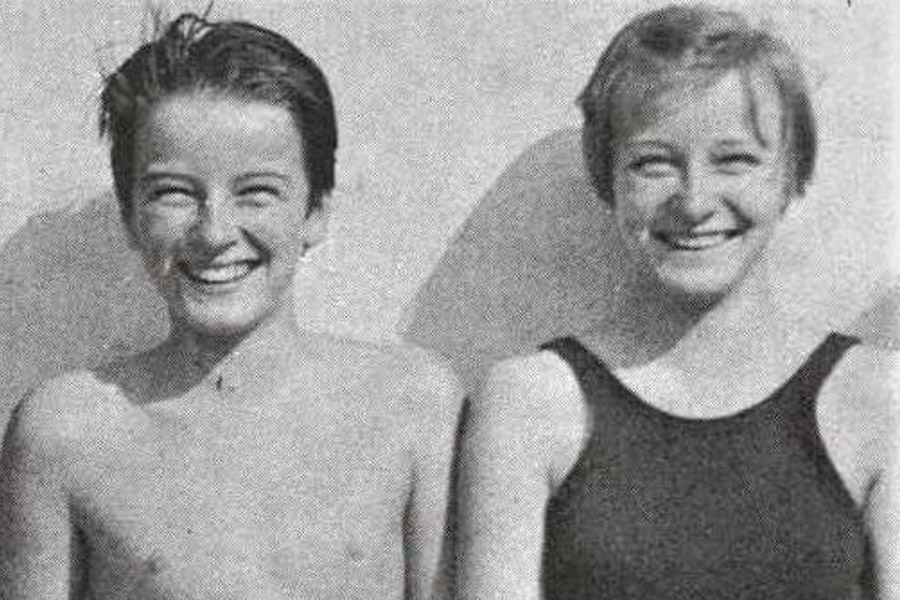
I think of Roberta Clift as one of those figures history often keeps at the edge of the spotlight, even though her life touched some of the most recognizable names in American culture. She was born in 1920 in Omaha, Nebraska, into the Clift family, a household shaped by money, education, travel, and public expectation. Her father was William Brooks Clift, a banker with a serious professional life, and her mother was Ethel Anderson Fogg Clift, sometimes remembered in family references as Sunny. Roberta also had a twin brother, Edward Montgomery Clift, who later became one of Hollywood’s most famous actors, and an older brother, William Brooks Clift Jr.
From the beginning, her life seems to have moved like a river with two channels. One channel led toward celebrity, performance, and public attention through Montgomery. The other led toward service, family, and civic work through Roberta. She eventually lived much of her adult life in Austin, Texas, where she became known not as a star, but as a builder of communities.
Family roots and the people closest to her
Roberta’s family tree reads like a layered portrait of early 20th century American upper class life. Her father, William Brooks Clift, was part of a banking world that valued stability and status. Her mother, Ethel Anderson Fogg Clift, came from a family connected to Woodbury Blair and Maria Latham Anderson. Those names place Roberta in a wider lineage that stretched back beyond her own lifetime, linking her to older family branches and inherited social standing.
Her siblings were central to her story.
| Family member | Relationship to Roberta Clift | Notes |
|---|---|---|
| William Brooks Clift Jr. | Older brother | Family member often called Brooks |
| Edward Montgomery Clift | Twin brother | Actor and the best known member of the family |
Montgomery’s fame often cast a bright and blinding light, but Roberta remained steady in another kind of role. She was the sister who preserved memory, kept family ties intact, and later safeguarded part of Montgomery’s archive. That detail matters to me because it shows that her family role was not passive. She did not simply belong to the family. She actively carried it forward.
Marriage, children, and the shape of home
In May 1945, Roberta married Robert Campbell McGinnis, a lawyer who built his own respected life in Austin. After marriage, she was often known as Ethel McGinnis. Their home became a long term anchor, first through moves tied to Robert’s work and military service, and later through permanent roots in Texas.
The couple had five children:
- Mary Blair McGinnis Moredock
- Campbell McGinnis
- John Montgomery McGinnis
- Robert Clift McGinnis
- Michael James McGinnis
To me, the children’s names tell their own story. One son carries Montgomery’s name, a quiet nod to the brother whose fame traveled far beyond the family. Another carries the Clift surname directly. The family remained tied to lineage while still making its own future.
Roberta was also a grandmother to 11 grandchildren, and the family expanded into several branches. The grandchildren’s names appeared in clusters tied to each child, creating the sense of a living family map. Her life was not just about being related to well known people. It was about building a household that kept multiplying its own memory.
Education and early work
Roberta studied sociology at Bryn Mawr College and graduated in the early 1940s. It shows a focus on people, systems, and service, which is vital. She was not empty-handed as an adult. Language, scholarly, and institutional knowledge were hers.
She ran an English-language and citizenship program for refugees in college. Later, in 1943, she worked for the Interior and State Departments in Washington, D.C., preparing Berlin wartime maps. That work may seem technical, but it shows a wartime generation that had to be useful swiftly and far from home.
Post-war, she taught English at Southern Methodist University in Dallas. The teaching profession is revealing. Patience, authority, and the capacity to simplify are needed. Those traits seem to have shaped Roberta’s life.
Austin and a life of civic service
When Roberta and her family settled in Austin in 1949, her public identity changed from daughter and sister to organizer and civic force. Austin became the city where she did her most visible adult work.
She volunteered with the Red Cross, the Cerebral Palsy Center, and Child and Family Services. She also worked on the Junior League teacher recruitment program. These roles may not sound glamorous, but they were the kind of work that holds a city together like hidden beams inside a house.
Two of her most important achievements stand out clearly:
- In 1957, she founded the Volunteer Bureau of Austin
- In 1960, she founded the International Hospitality Council of Austin
Those organizations show a practical imagination. She understood that cities need both structure and welcome. The Volunteer Bureau turned goodwill into organized service. The International Hospitality Council connected host families with foreign students, making Austin feel wider, warmer, and more international. I picture her work as a lantern carried through a crowd, giving shape to people who might otherwise have drifted apart.
A later local preservation record also described her as directing the Pan-American Roundtable, the Volunteer Bureau of Austin, and the Austin International Hospitality Commission from the Scenic Drive home she shared with her husband. That home was not only a residence. It was a stage for civic life, a place where ideas and people crossed paths.
Her connection to Montgomery Clift
Although Montgomery was Roberta’s renowned brother, their relationship was important. According to family tradition, he visited her in Austin in the 1950s and early 1960s and maintained a strong bond. Montgomery died in 1966, making Roberta’s role in safeguarding his legacy even more important.
Her 1967 and 2004 donations to the New York Public Library included his papers. Your stewardship shows you understand the difference between celebrity and remembrance. Fame can burn brightly and wane soon. Archives are cooler, slower, and stronger. Roberta preserved part of Montgomery’s life for readers, historians, and lovers.
A family portrait in motion
What strikes me most about Roberta Clift is how many different forms her life took without losing its center. She was a daughter, twin, sister, wife, mother, grandmother, teacher, organizer, donor, and civic leader. Her story is not a single bright arc. It is more like a woven fabric, with each thread supporting the others.
Here is the family structure as I see it:
| Category | Names |
|---|---|
| Parents | William Brooks Clift, Ethel Anderson Fogg Clift |
| Siblings | William Brooks Clift Jr., Edward Montgomery Clift |
| Spouse | Robert Campbell McGinnis |
| Children | Mary, Campbell, John Montgomery, Robert Clift, Michael James |
| Grandchildren | 11 grandchildren across the family branches |
She died in Austin on December 7, 2014, at age 94. That long life carried her from the early 20th century into the digital age, from Omaha to Austin, from wartime service to local activism, from family shadow to family anchor.
FAQ
Who was Roberta Clift?
Roberta Clift was the twin sister of actor Montgomery Clift, later known as Ethel McGinnis, and a longtime Austin civic organizer and volunteer.
What was Roberta Clift’s family background?
She was born into the Clift family in Omaha, the daughter of William Brooks Clift and Ethel Anderson Fogg Clift, with two brothers, William Brooks Clift Jr. and Montgomery Clift.
Was Roberta Clift married?
Yes. She married Robert Campbell McGinnis in May 1945.
How many children did she have?
She had five children: Mary, Campbell, John Montgomery, Robert Clift, and Michael James.
What kind of work did she do?
She studied at Bryn Mawr, worked in Washington during World War II, taught English at SMU, and later founded major Austin service organizations.
Why is she historically important?
She preserved her brother Montgomery Clift’s papers, founded civic institutions in Austin, and played a lasting role in community service and hospitality work.